How far does my ethics?
Mauricio Castro Pedrero
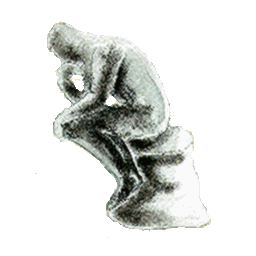
Have you ever faced an ethical dilemma in which his principles told to act a certain way, but you know - or think they know - that if you act according to its principles, will face consequences that do not know - or believed not to know - if you are willing to endure?.
The answer to this and other questions of the same nature, it is not easy, because for that you can gain clarity about how to act - when facing this kind of dilemma - mainly two conditions must be met: a) sound ethical principles and well defined and b) values \u200b\u200bclearly identified priorities. So then, who does not meet these conditions will not be ready to deal decisively with an ethical dilemma and tranquility.
The bottom line is that most likely be a minority that meets these requirements.
Ethical principles
Usually, people do not sit around thinking about what ethical principles, especially in those things or activities that there is no consensus about its correctness [1] . Act alone as they face various situations in which reveal the ethical principles that are within (though not even realize it!).
So then, to have clarity and certainty about how bad it is killing, stealing, violating human rights, corrupt, etc., It is very difficult in theory.
However, the complexity of it all when it comes to operationalize the principles we set for ourselves: I'm not willing to kill under any circumstance?, am I not willing to steal my children but to die of starvation?, will I be able to follow my ethical principles to the bitter end?
When complex situations arise, but real, is when they test our ethical principles and in this way, you can tell by the actions of others, what are the principles of these and on the other hand, others can their awareness of the principles beyond mere declarations. Moreover, my comments, yours and that of others, have no importance if they are not supported by shares.
And here, the action is the difficulty, because throughout our lives - both at personal and at work - we must face situations that test our principles, revealing the strength or weakness of our convictions . If our principles are weak, they create a personal feeling of confusion, having no certainty of the correctness of a particular activity. On the other hand, if our ethical principles are sound, we will easily determine whether an activity is consistent or not with these principles.
But is it enough to have strong ethical principles that allow us to clearly differentiate ethics of an activity that is not?. Unfortunately not.
Where are our priorities?
Once we determine what our most cherished principles and values, we must reflect and try to answer the following question: "I will defend to the death and be consistent with my principles, regardless of the consequences that may result in my actions?.
Think for example that you consider as a fundamental value of honesty. For its part considers that the family is the most precious thing in your life. Now imagine that your partner becomes aware that a close relative or robbed a bank, do you (a) betray?, What is more important: honesty or family?. Please
other less extreme but equally difficult: In your work you are asked to perform an activity that you think outside the moral parameters (may be ordered to do something legal, but in his opinion, inappropriate), but fears that if he refuses, get fired or at least make it difficult to stay in their workplace and therefore their ability to ascend. In this case, acting in accordance with the principles, has potential costs associated with that not everyone will be willing to endure.
In theory, this dilemma is reflected in two ways to view the ethics [2] .
one hand we have what is called "ethics of responsibility" epitomized by Max Weber. This view of ethics states that before acting, we must analyze the consequences of our actions, and, after such analysis, determine what is most convenient (pragmatic view of ethics). Now, look - or at least see - the potential consequences that may occur to follow our principles, it is normal and will always happen because the man is a being who possesses the gift of rationality and, therefore, be very difficult to abstract of what can happen if one acts a certain way. However, if from this analysis (call cost-benefit analysis), you take the decision to act one way or another, you are in this category [3] .
On the other hand, we have the "Ethical Principles" or "ethics of conviction", which tells us that everyone should act in accordance with their principles, regardless of the consequences to imagine.
So then, the second and final step is to define what are our priorities. In other words, we must consider how far and to achieve are willing to defend the principles and act accordingly. In short, what we must do is stop deluding and decide once between the ethics of responsibility or ethical principles. We must choose one if we have clarity in the act.
decision: To act or not act [4]
As we discussed, the man being confronted with an ethical dilemma, you can take the following decisions:
Acting on his principles, regardless of the consequences.
Act, but in a different way which would not exist consequences (follow the principles to which the consequences are accepted)
not act, since the (negative) consequences of action are higher than the satisfaction it would give the act in accordance with the principles (decision based on an analysis cost-benefit).
Thus, we can distinguish three types of people:
Those who have no ethics, so for them this article were not reported at all or, at most, a small doubt that will disappear with the speed that a criminal removes the wallet to a stranger (offender, by the way, chances are in this category.)
The ethical principles that are more or less solid, but are not willing under any circumstances to assume the consequences of that follow their principles. These are the people who are more ethical dilemmas, as the analysis of the consequences is complex and involves a sense of confusion and sometimes guilt (because they want to act in a certain way, but the analysis says otherwise.)
Those with sound ethical principles and have made the difficult decision to act in accordance with its principles in all circumstances. These people are showing more consistency between what they think and what they do. However, will have serious difficulties in their relationship with the environment, because not everyone (actually, a tiny minority) think and act like these people.
And you, what class are you? ... The answer is not easy, but if at the end of these lines, you intend to answer this question (even if it fails to answer), I will have fulfilled my goal.
------------------------------------------ --------------------
Voting against the United States "decision of principle or analysis pure?
Remember when Chile, as a member of the Security Council of the UN, must vote in favor or against invading Iraq. At that time the government of Ricardo Lagos, had to take a very complex decision. Perhaps the value of the Government position was always clear: against invading Iraq for lack of concrete evidence. However, it began to speculate about the retaliation that the U.S. could take against our country. These reprisals - they said - had to do with the economic issue, especially with a possible delay - or failure for more fatalistic, the signing of free trade with that country. Finally
Chile chose not to vote for the interests of the United States, but what do you think the government did not analyze the consequences of his decision and chose to vote as was done only out of conviction? Or, analyze the scenario and felt that this decision does not undermine the negotiations for the FTA with the United States?. Who knows.
[2] theoretical views on ethics, see Orellana, Patricio, "Two conflicting ethics", available at web site http://www.probidadenchile.cl
[3] regard it is possible to note that in analyzing potential effects of a decision, someone may overestimate the consequences of their acts, which acts as an inhibitor of the action ("may get fired and how things are difficult, perhaps never again find work anymore ... it would be irresponsible to my family "... then I do not act).
[4] A real case related to a government decision, is shown in the "Voting against the United States" decision of principle or pure analysis? ".


0 comments:
Post a Comment